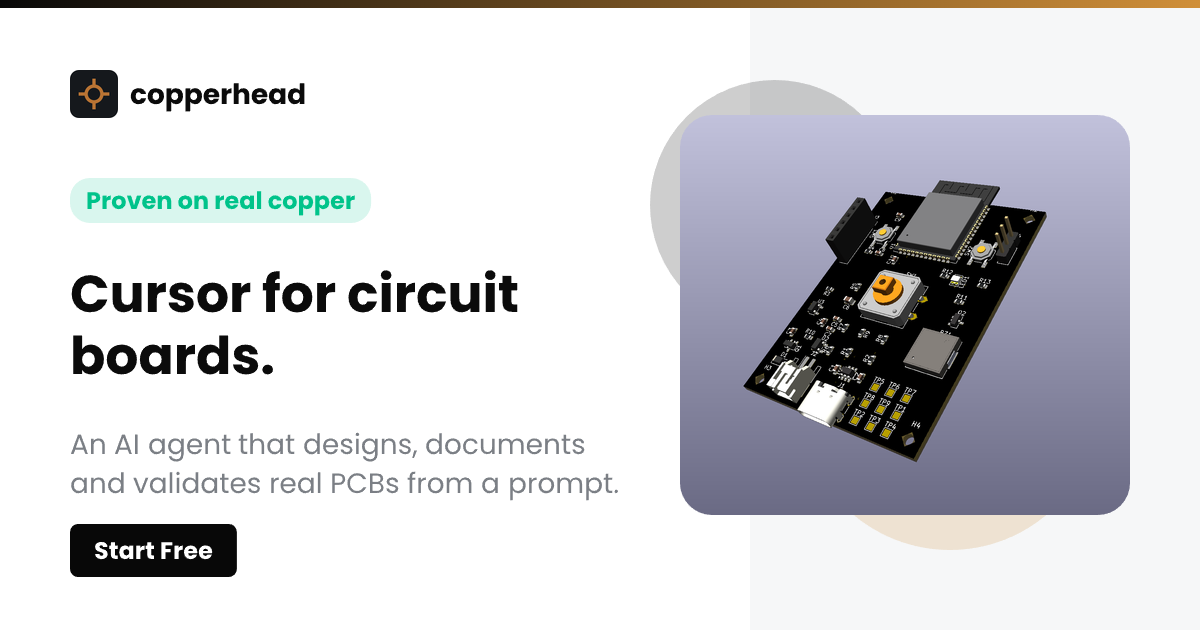
Copperhead
Cursor for circuit boards
About Copperhead
Copperhead — Cursor for circuit boards. It was shared on Show HN in 2026 and received 250 upvotes on Hacker News. An open-source AI agent that designs, documents and validates real PCBs from a prompt. copperhead is an open source, verification-first AI agent for PCB design. Open Telegraph: pocket-size ESP32-S3 Morse key, built end to end with this workflow. Read the build story Browse the repo How it works Eight stages, start to finish. copperhead runs the stages in order, each one its own agent run. A stage has to leave its artifact on disk before the next starts. Every hop is a gate: no real work on disk, no commit . The CLI is free and always will be, and it does the real work on its own. You pay to host it, to work as a team or to give an auditor what they ask for. Runs locally, never metered Community support Most popular Cloud $49 per user / month Free for open hardware repos Hosted runs on private repos, with a web viewer. An open source AI agent that designs, documents and verifies printed circuit boards. You describe a change or hand it a product brief, and it edits your real KiCad files, updates every document that references them, and runs KiCad's own checks until they pass. A hardware design spreads one decision across a schematic, a bill of materials, a power budget and several documents, and nothing breaks when they fall out of sync. The inconsistency is found at bring-up, and a respin costs 5,000 to 50,000 dollars and six to eight weeks. Node 20 or newer, KiCad with kicad-cli on your path and a model API key of your own. It can also run the full pipeline from a written brief with copperhead create , but iterating on real designs is what it is best at. Edits are surgical changes to the KiCad s-expression source, so your diffs stay small and reviewable and untouched parts of the file stay byte-identical. A tool that regenerates the file to move one net has made its own work impossible to review. copperhead is open source and free to use.
Community AMA
Ask the founder anything!
No questions yet. Be the first to ask!
Community Perks
Check back soon for exclusive offers
We're cooking up something special with 'Copperhead' to bring you exclusive perks!
The kitchen is busy - amazing deals are coming soon! 🔥
You Might Also Like...
MemoriesFOSS Google Photos alternative built for high performance

FrameOSoperating system for single function smart frames

AutomatischOpen source workflow automation, an alternative to Zapier
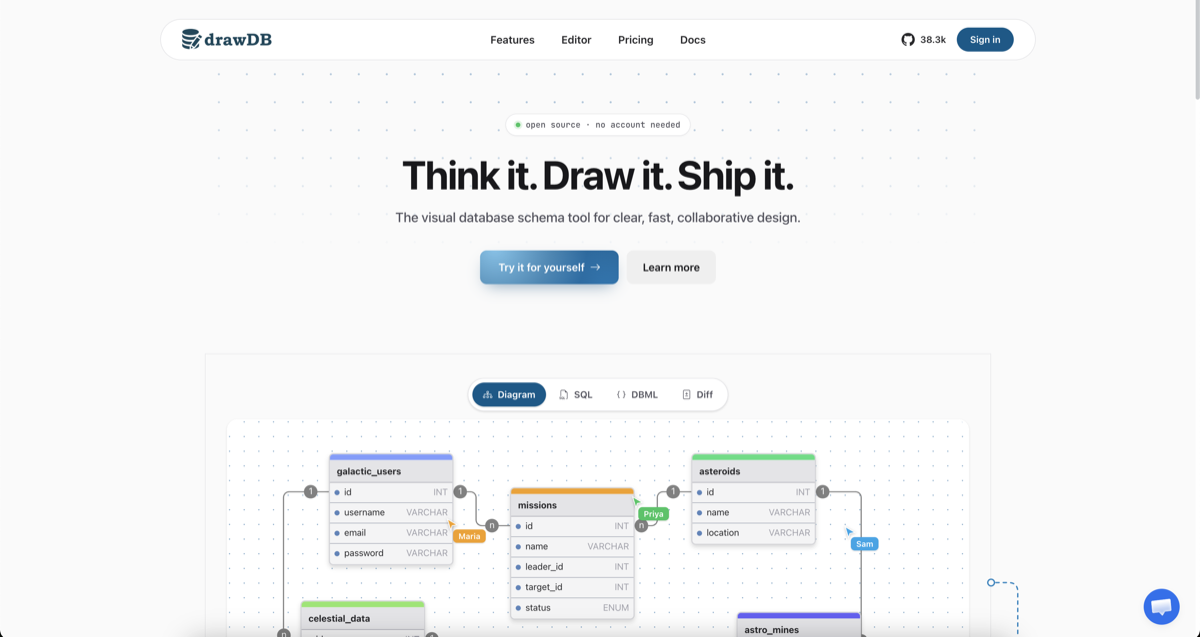
DrawDBopen-source online database diagram editor (a retro)
Alternatives to Copperhead: Memories, FrameOS, Automatisch, DrawDB · Compare all alternatives ›